
Raleigh Oak intentionally and creatively merges Public Waldorf Curriculum and Pedagogy with the NC Standard Course of Study.
Kindergarten - Whole Child Development
Kindergarten emphasizes creative, open-ended play that catalyzes young children to develop the problem-solving, relational, motor, and creative thinking skills they will need throughout life. This approach is enriched through engaging experiences such as nursery rhymes, nature stories, letter stories, and number stories, which foster imagination while building early literacy and numeracy skills.
Children explore foundational concepts through play-based learning. Number sense, shapes, early reading, language development and daily living skills are intertwined into activities to promote independence and confidence. While purposeful play encourages social interaction, curiosity, and hands-on discovery. Together, these elements create a joyful, developmentally appropriate environment where children learn through exploration, storytelling, and meaningful experiences.

Grade 1 - Fantasy & Imagination
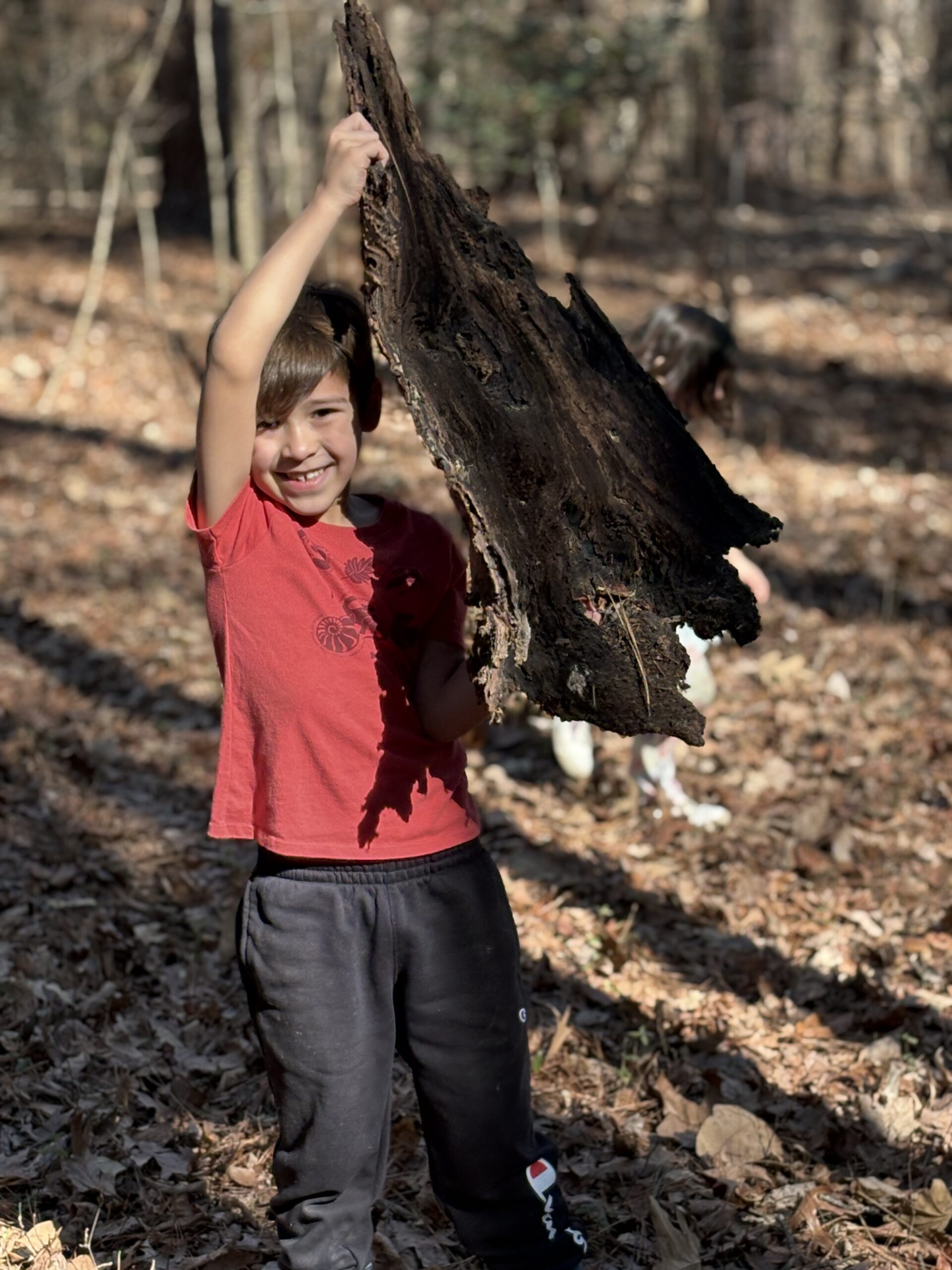
First grade is full of fairy tales and wonder at the world around us. Through experiential learning rich in song, art, and movement, students build strong foundations in reading and mathematics while nurturing curiosity and imagination. Fairy tales—including stories from the Brothers Grimm and others from around the world—spark creativity and support language development as children practice decoding and encoding sentences and begin crafting their own personal narratives.
Mathematical understanding grows through hands-on exploration of numbers and operations, place value, shapes, and measurement. Students also deepen their sense of wonder by exploring sun, moon, and Earth systems, connecting science to their everyday observations. A class play and other creative experiences provide opportunities for collaboration, expression, and confidence-building, bringing learning to life in meaningful and memorable ways.
Grade 2 - Duality, Right & Wrong, Good & Bad
Second graders are at a unique in-between stage, with “one foot still on the rainbow bridge.” Living within this sense of duality, they are especially open to understanding stories from around the world that reflect the contrasts of human nature—good and evil, saints and tricksters, heroes and everyday people. Through fables and folk tales, students explore these themes while deepening their reading fluency and comprehension and strengthening their ability to retell and reflect on stories.
Students continue to develop their voice through personal narratives, while expanding their understanding of language through states and sounds. Their growing awareness of the world is supported by studies in life cycles and weather, helping them make meaningful connections between stories and the natural world.
Mathematical thinking becomes more analytical as students engage with measurement and data, geometry, and reasoning in areas such as economics and government. Through hands-on exploration and discussion, they begin to see patterns, relationships, and systems in both numbers and society.
Creative expression remains central to the year, with a class play and collaborative projects offering opportunities for imagination, empathy, and confidence. In this way, second graders grow into a deeper understanding of the world around them, holding both wonder and awareness as they continue their learning journey.


Grade 3 - Grounding & Providing for Oneself
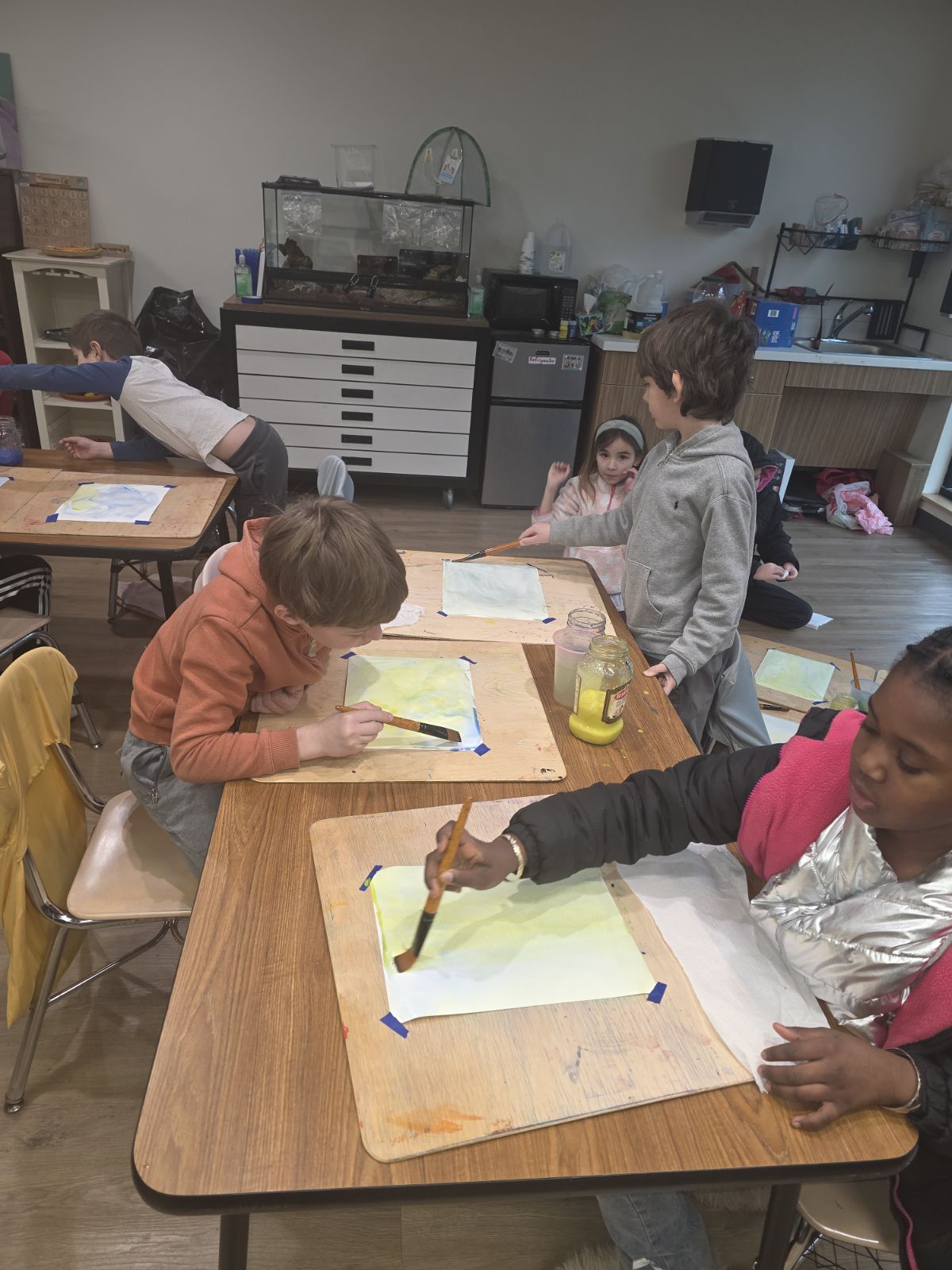
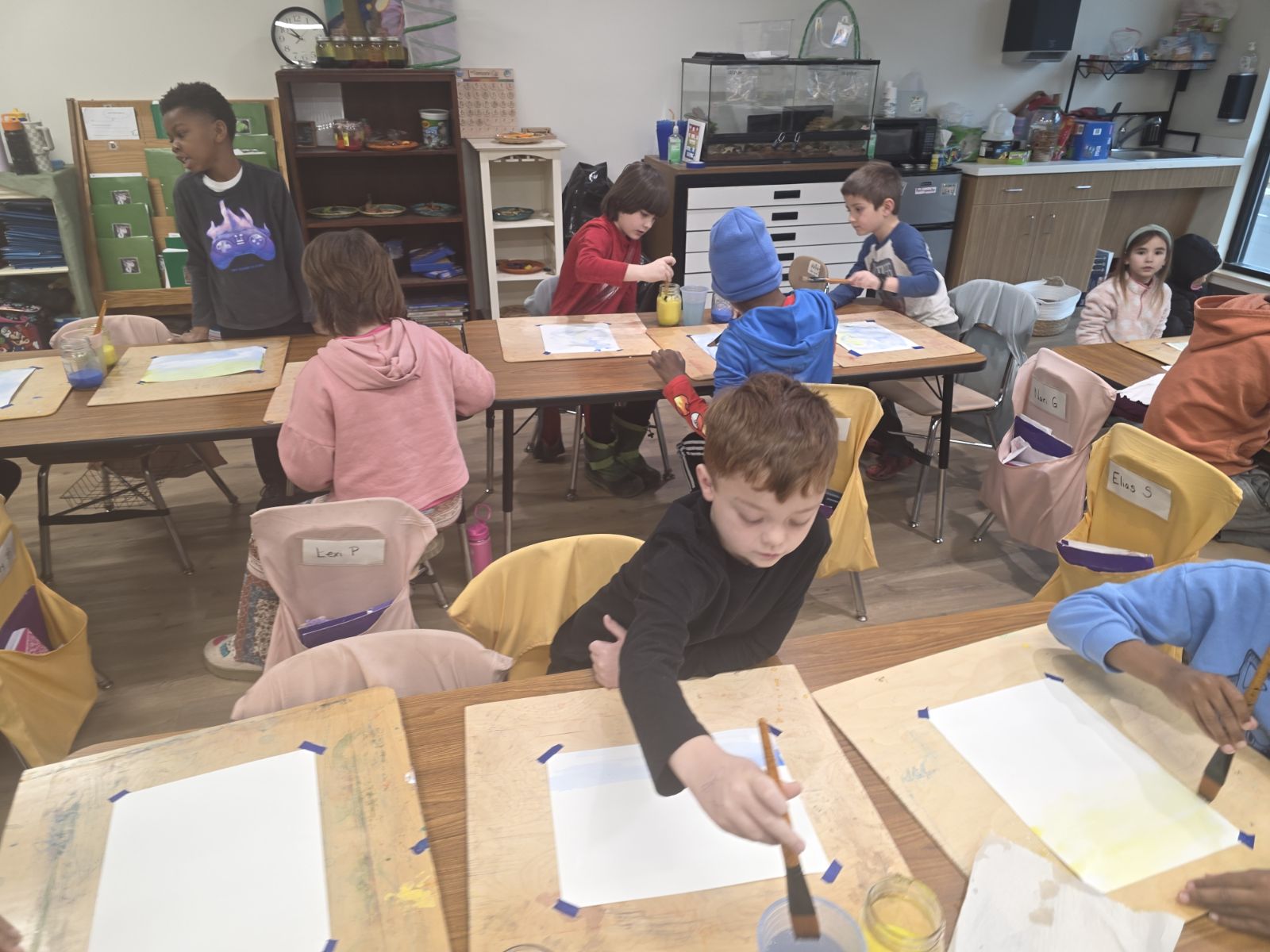
In third grade, students learn about ancient creation stories from around the world (including Old Testament and Native American beginnings) forms the background for the language arts curriculum. These rich narratives support the development of reading comprehension while guiding students in structured writing and personal narratives.
It is also the year of practical math. Children build on the skills they have acquired during the past two years as they strengthen their understanding of operations, measurement, and time. They are expected to know the multiplication tables by heart and apply their knowledge to real-world contexts, including money, basic economics, and an introduction to government. Students also begin working with fractions, deepening their number sense and problem-solving abilities.
Connections to daily life are emphasized through studies in farming and health, helping students understand how human activity relates to the natural world. In their study of shelters, third graders learn about different types of dwellings and create miniature models of ancient homes, bringing history and practical skills together through hands-on experience.
A class play and other creative projects round out the year, offer opportunities for collaboration, expression, and confidence as students continue to grow academically and socially.
Grade 4 - Find One’s Place in the World
In 4th grade, students learn how to think deeply, make meaningful connections, and engage with more complex concepts across all subjects. Throughout the year, they explore a rich and diverse curriculum that includes Norse Mythology and Indigenous U.S. Mythology, strengthening their ability to analyze stories and understand different cultures. In literacy, students focus on analyzing texts and developing personal narratives, writing with clarity, flow, and structure similar to traditional essays.
In mathematics, students build strong problem-solving skills through fractions, geometry, and data, while in science they investigate zoology and life science as well as physical science concepts such as force, motion, energy, and electricity. Social studies expands their understanding of the world through North Carolina-focused topics, including geography, weather, government, economics, and behavior.
Students also have opportunities to collaborate and express creativity through activities like a class play, helping to build confidence and communication skills.
Fourth graders are encouraged to become more independent learners, relying less on direct teacher guidance. They research, plan, and revise their work with increasing ownership—laying the foundation to become lifelong, self-motivated learners.

Grade 5 - Transition (Myth to History)
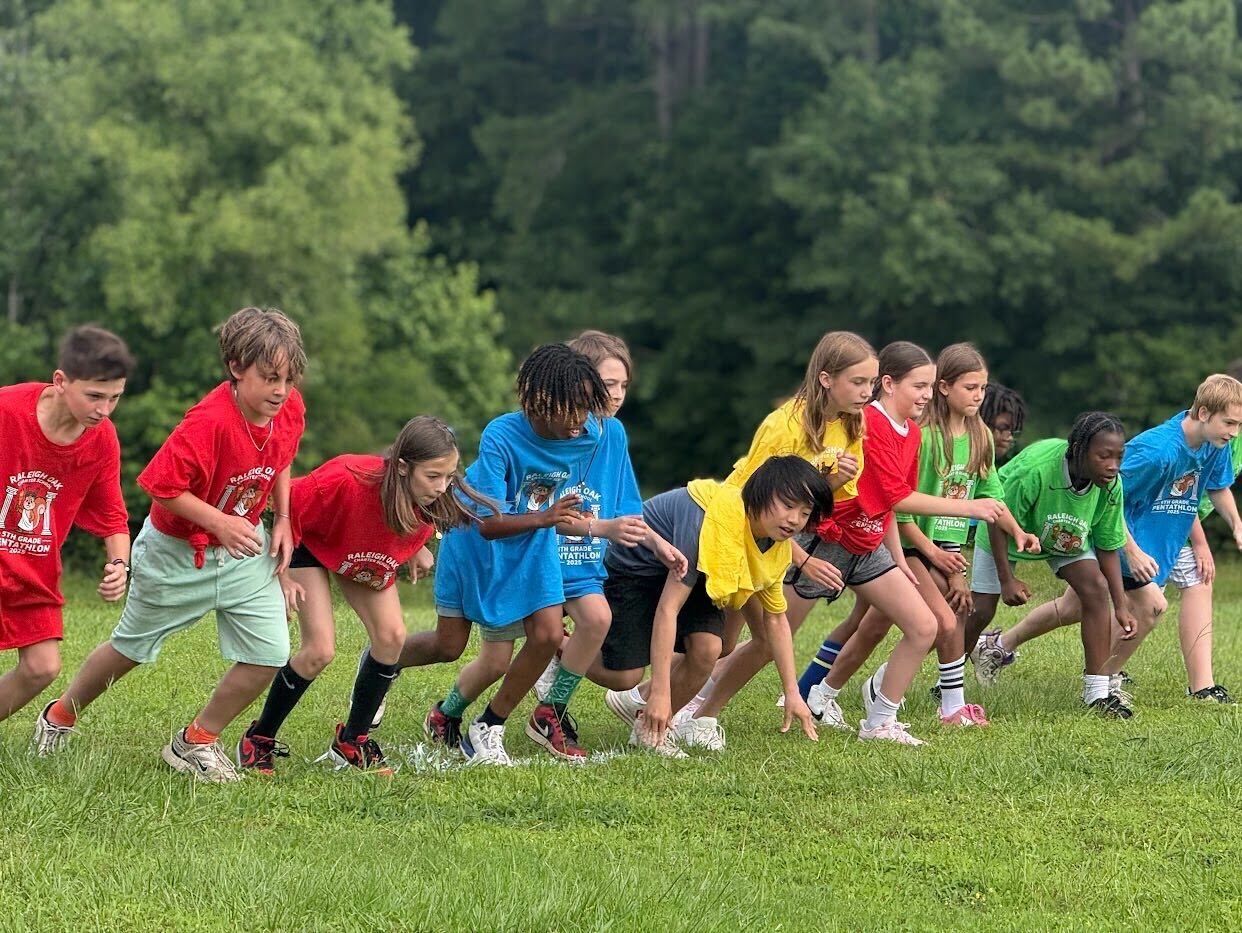
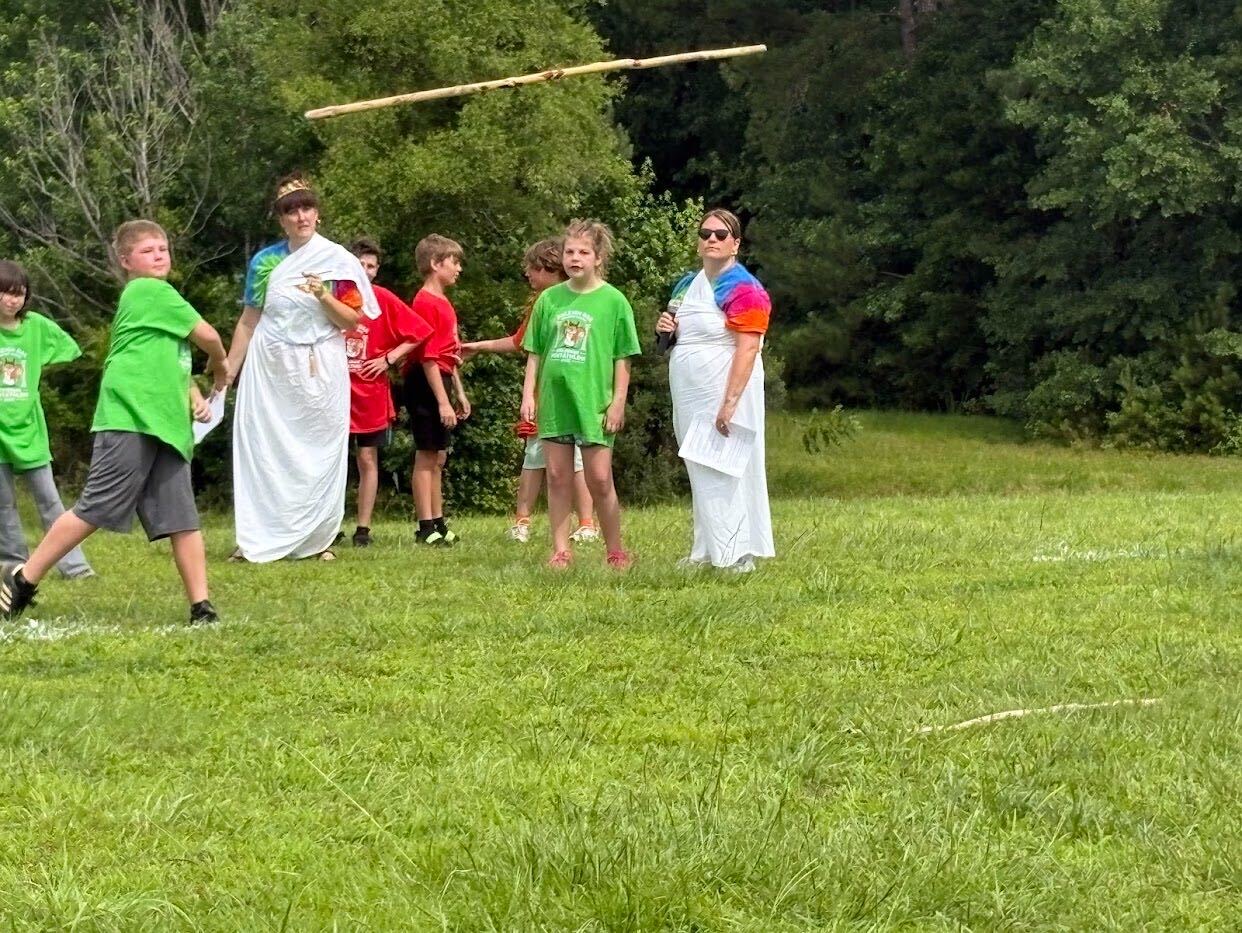
In 5th grade, students transition from myth to history, exploring Ancient Civilizations and Mythology through engaging, project-based learning. As they study civilizations such as ancient Greece, they build critical thinking skills by working with complex texts and making connections between past and present. At the end of the year, students celebrate their learning by participating in the annual Pentathlon.
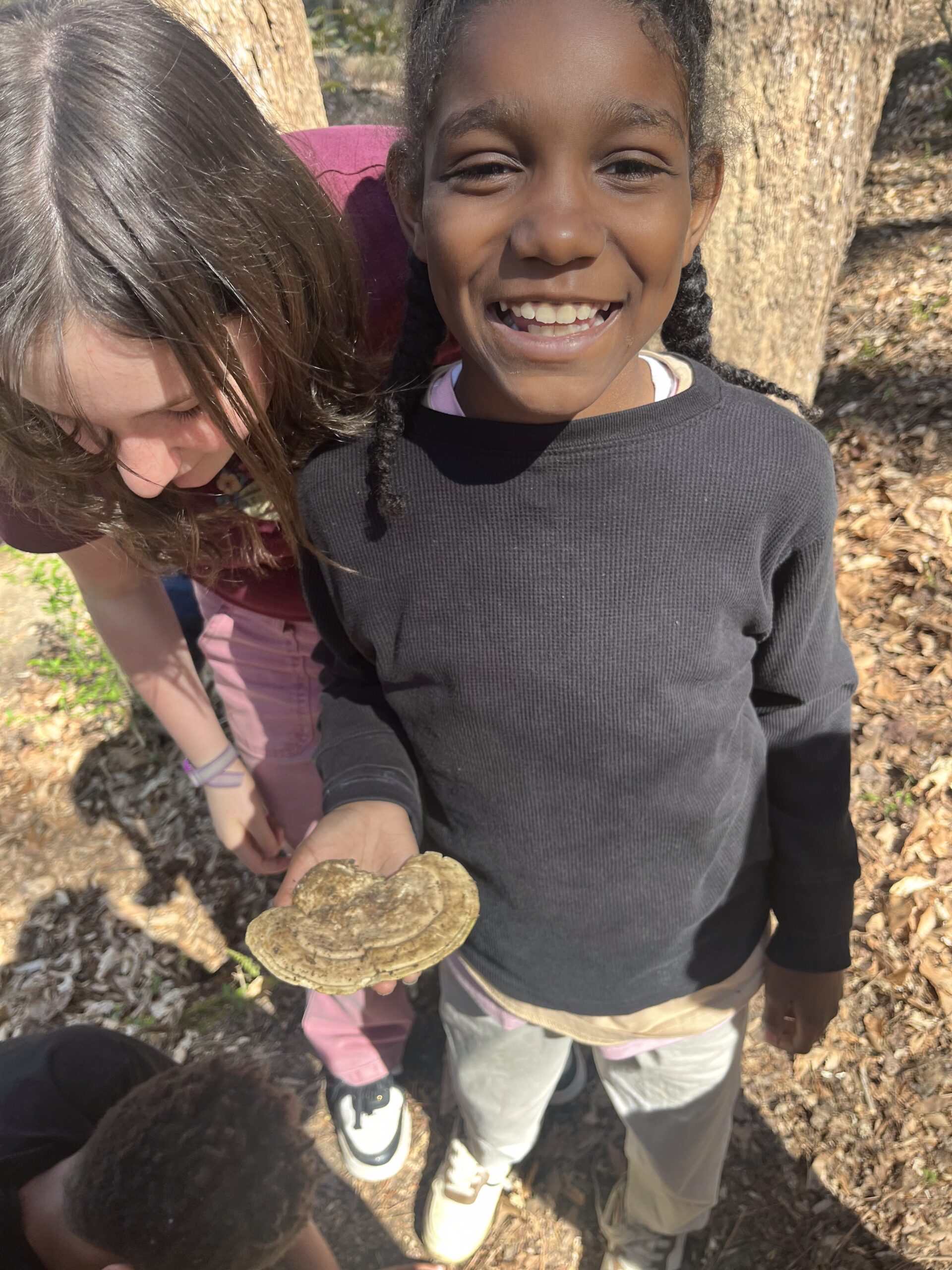
Throughout the year, students deepen their understanding across subjects. In literacy, they engage with complex texts that strengthen comprehension and analytical skills. In mathematics, they expand their knowledge of place value, fractions, and decimals, as well as geometry. Science learning includes life science, botany and ecosystems, and earth science, helping students understand the natural world and their place in it.
In social studies, students explore U.S. geography and history along with U.S. human rights, developing a broader awareness of civic responsibility and global connections. Creative expression and collaboration are also emphasized through activities like the class play, building confidence and teamwork.
Grade 6 - Cause & Effect in the World
Students foster a lifelong love for learning by emphasizing critical thinking skills, encouraging curiosity, and cultivating a global understanding. They are supported in developing a growth mindset while setting personal goals that promote independence and continuous growth, all while meeting state standards for education.
Throughout the year, students engage in a rich and rigorous curriculum that includes Ancient Rome, Medieval History, and the History of Religions, helping them understand the connections between past societies and the modern world, as well as U.S. Human Rights. In literacy, they strengthen their skills through literary analysis and argumentative writing, learning to think critically and communicate effectively.
In mathematics, students build confidence and precision through geometry, ratios, decimals, and business math and economics. Science instruction spans earth science and astronomy, mineralogy and geology, life science: organisms and ecosystems, and physical science concepts such as matter, energy, and waves, giving students a comprehensive understanding of the natural world.
Students also have opportunities for creativity and collaboration through experiences like the class play, while extracurricular clubs—including Art, Yearbook, Robotics, and Math Circle—allow them to explore interests, develop new skills, and connect with their school community.


Grade 7 - Age of Exploration & Self Awareness
Students engage in a dynamic and challenging curriculum designed to deepen their understanding of the world while strengthening critical thinking and independence. Through the study of Africa and the Renaissance, students explore important historical and cultural developments, while also examining Global Human Rights to build awareness of global issues and perspectives.
In literacy, students develop strong analytical skills through critical reading and research, learning to evaluate sources, think deeply, and communicate their ideas effectively. Mathematics instruction includes pre-algebra, geometry, and statistics, equipping students with the tools to solve complex problems and think logically.
Science learning spans a wide range of disciplines, including biology, anatomy, physics, and earth science, encouraging students to investigate the natural world through observation, experimentation, and inquiry. Explorations provide opportunities for curiosity-driven learning and interdisciplinary connections.
Students also express creativity and build confidence through collaborative experiences such as the class play, rounding out a well-balanced academic experience.
Grade 8 - Stepping into the World & Finding One’s Place
Students engage in a rigorous and well-rounded curriculum that challenges them to think critically, analyze deeply, and make meaningful connections across disciplines. Through the study of geography, Asia, the American Revolution, and the broader Age of Revolutions, students gain a strong understanding of historical events and their lasting global impact, along with insights into N.C. government and economics.
In literacy, students refine their skills through advanced analysis and academic writing, learning to construct clear, well-supported arguments and communicate ideas effectively. Mathematics instruction includes algebra and geometry, strengthening problem-solving abilities and logical reasoning.
Science studies span life science, physical science, and earth and environmental science, encouraging students to explore the natural world through inquiry, investigation, and real-world applications.
Students also have opportunities to collaborate and express creativity through experiences like the class play, building confidence, teamwork, and communication skills.
Students
Chickens
Faculty
Years Established
Get In Touch
Location: 321 Rock Forest Rd. Raleigh, NC 27610
Telephone: (919) 322-2615
Fax: (919) 322-2634
Email: info@raleighoakcharter.org